Top 10 amazing facts about space that can blow your mind
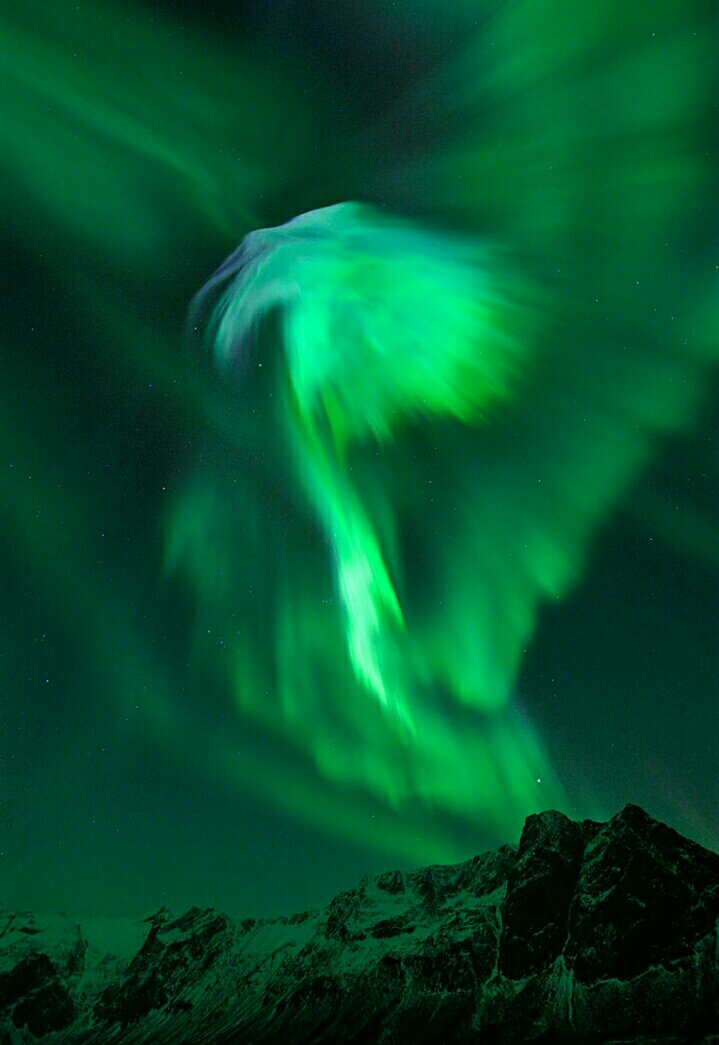
1. Eagle Aurora over Norway
What’s that in the sky? An aurora. A largecoronal mass ejection occurred on our Sunfive days before this 2012 image was taken,throwing a cloud of fast moving electrons, protons, and ions toward the Earth. Although most of this cloud passed above the Earth, some of it impacted our Earth’smagnetosphere and resulted in spectacular auroras being seen at high northern latitudes.Featured here is a particularly photogenicauroral corona captured above Grotfjord,Norway. To some, this shimmering green glow of recombining atmospheric oxygenmight appear as a large eagle, but feel free toshare what it looks like to you. Although the Sun is near Solar Minimum, streams of the solar wind continue to impact the Earth and create impressive auroras visible even last week.
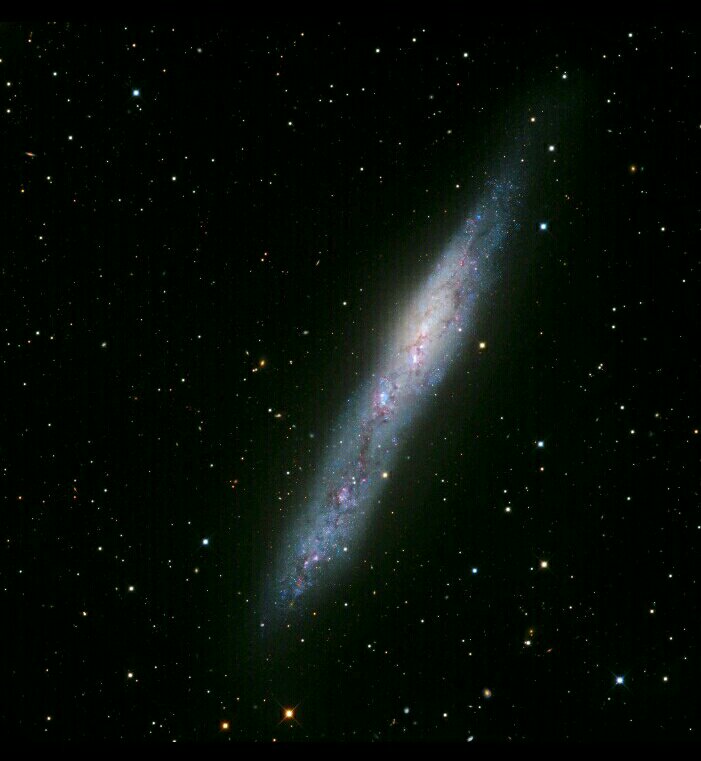
2. Magellanic Galaxy NGC 55
Irregular galaxy NGC 55 is thought to be similar to the Large Magellanic Cloud (LMC). But while the LMC is about 180,000 light-years away and a well-known satellite of our own Milky Way Galaxy, NGC 55 is more like 6 million light-years distant, a member of theSculptor Galaxy Group. Classified as anirregular galaxy, in deep exposures the LMC itself resembles a barred disk galaxy. Spanning about 50,000 light-years, NGC 55 is seen nearly edge-on though, presenting a flattened, narrow profile in contrast with our face-on view of the LMC. Just as large star forming regions create emission nebulae in the LMC, NGC 55 is also seen to beproducing new stars. This highly detailedgalaxy portrait highlights a bright core crossed with dust clouds, telltale pinkish star forming regions, and young blue star clusters in NGC 55.
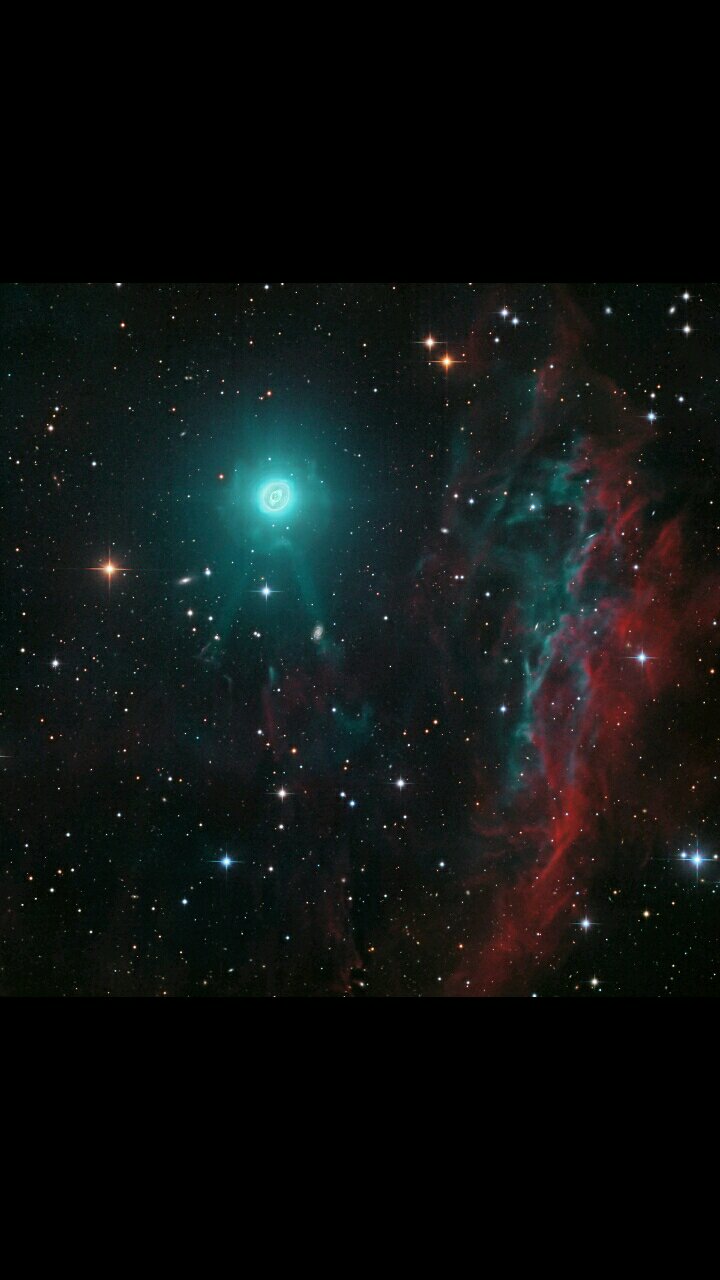
3. The Ghost of Jupiter’s Halo
Close-up images of NGC 3242 show the cast off shroud of a dying, sun-like star fancifully known as The Ghost of Jupiter nebula. But this deep and wide telescopic view also finds the seldom seen outer halo of the beautiful planetary nebula at the upper left, toward Milky Way stars and background galaxies in the serpentine constellation Hydra. Intense and otherwise invisible ultraviolet radiation from the nebula’s central white dwarf star powers its illusive glow in visible light. In fact, planets of NGC 3242’s evolved white dwarf star may have contributed to the nebula’s symmetric features and shape. Activity beginning in the star’s red giant phase, long before it produced a planetary nebula, is likely the cause of the fainter more extensive halo. About a light-year across NGC 3242 is some 4,500 light-years away. The tenuous clouds of glowing material at the right could well be interstellar gas, by chance close enough to the NGC 3242’s white dwarf to be energized by its ultraviolet radiation.
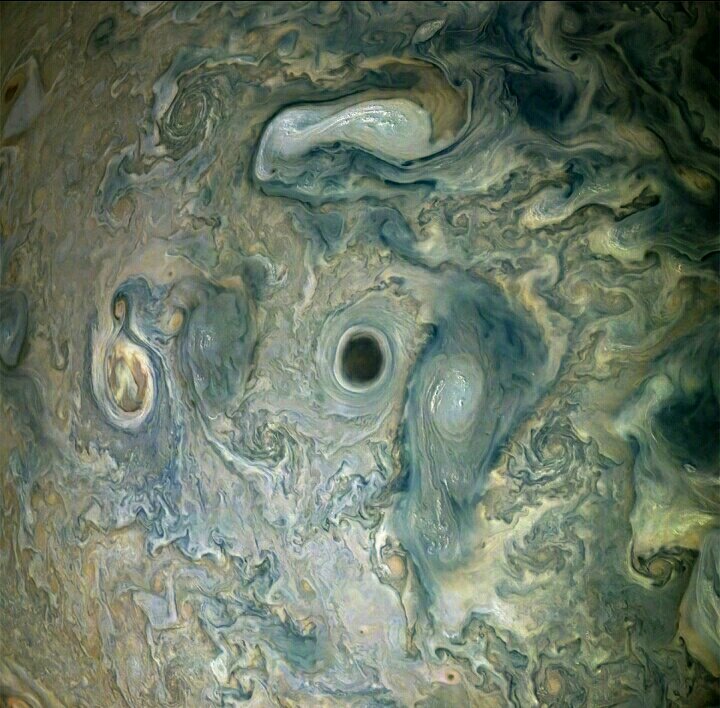
4. Jupiter Abyss
NASA’s Juno spacecraft captured this view of an area within a Jovian jet stream showing a vortex that has an intensely dark center. Nearby, other features display bright, high altitude clouds that have puffed up into the sunlight.
The color-enhanced image was taken at 12:55 a.m. PDT (3:55 a.m. EDT) on May 29, 2019, as the spacecraft performed its 20th science flyby of Jupiter. At the time, Juno was about 9,200 miles (14,800 kilometers) from the planet’s cloud tops, above approximately 52 degrees north latitude.
Citizen scientists Gerald Eichstädt and Seán Doran created and named this image using data from the spacecraft’s JunoCam imager.
JunoCam’s raw images are available for the public to peruse and process into image products at https://missionjuno.swri.edu/junocam/processing.
More information about Juno is at https://www.nasa.gov/juno and https://missionjuno.swri.edu.
4. The Galactic Center in Radio from MeerKAT
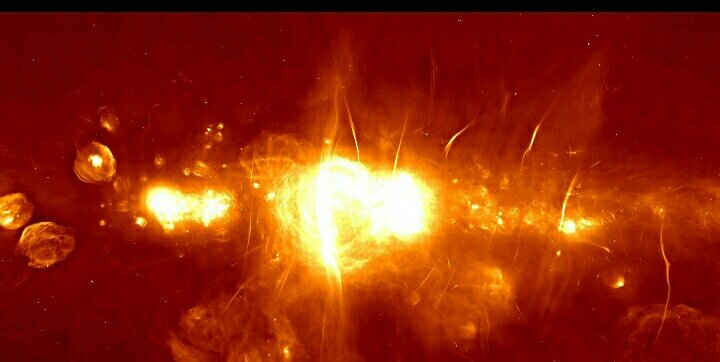
What’s happening at the center of our galaxy? It’s hard to tell with optical telescopes sincevisible light is blocked by intervening interstellar dust. In other bands of light, though, such as radio, the galactic center can be imaged and shows itself to be quite aninteresting and active place. The featured picture shows the inaugural image of theMeerKAT array of 64 radio dishes just completed in South Africa. Spanning four times the angular size of the Moon (2degrees), the image is impressively vast, deep, and detailed. Many known sources are shown in clear detail, including many with a prefix of Sgr, since the Galactic Center is in the direction of the constellation Sagittarius. In our Galaxy’s Center lies Sgr A, found here just to the right of the image center, which houses the Milky Way’s central supermassive black hole. Other sources in the image are not as well understood, including the Arc, just to the left of Sgr A, and numerous filamentary threads. Goals for MeerKAT include searching for radio emission from neutral hydrogen emitted in a much younger universe and brief but distant radio flashes.
5. Crescent Saturn
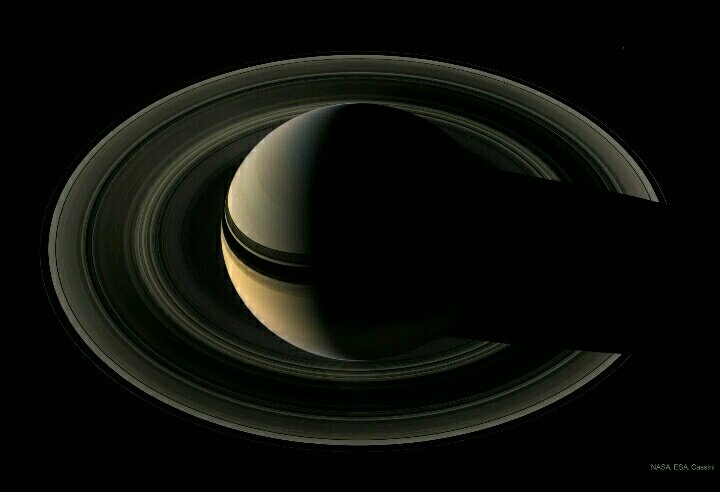
Saturn never shows a crescent phase — from Earth. But when viewed from beyond, themajestic giant planet can show an unfamiliar diminutive sliver. This image of crescent Saturn in natural color was taken by the robotic Cassini spacecraft in 2007. The featured image captures Saturn’s majestic rings from the side of the ring plane opposite the Sun — the unilluminated side — another vista not visible from Earth. Pictured are many of Saturn’s photogenic wonders, including the subtle colors of cloud bands, the complex shadows of the rings on the planet, and the shadow of the planet on the rings. A careful eye will find the moonsMimas (2 o’clock) and Janus (4 o’clock), but the real challenge is to find Pandora (8 o’clock). Saturn is now nearly opposite from the Sun in the Earth’s sky and so can be seenin the evening starting just after sunset for the rest of the night.
6. Earth’s Glow, the Moon and a Starry Night
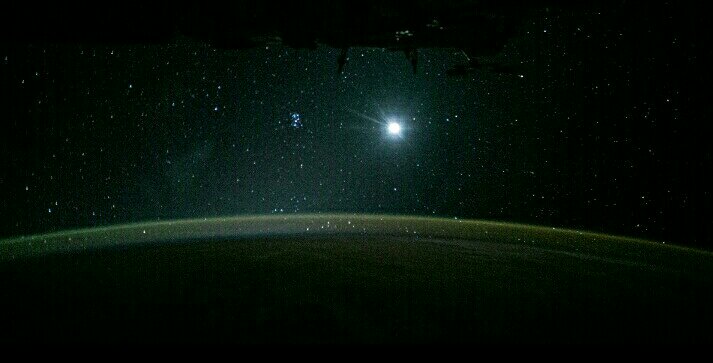
Imagine seeing the Earth, Moon and stars all in one view. Such a vision was captured by the crew of the International Space Station. They could see the Earth’s atmospheric glow, highlighted by the Moon and a starry orbital nighttime background while orbiting 256 miles above the Pacific Ocean, southeast of the Hawaiian island chain.
7. Growing VEGGIEs in Space
Leafy greens are growing in space! The Columbus laboratory module’s VEGGIEbotany research facility is the home to theInternational Space Station’s gardening activities. The VEG-04 botany study is exploring the viability of growing fresh food in space to support astronauts on long-term missions. The salad-type plants are harvested after 28 days of growth, with some samples stowed for analysis and the rest taste-tested by the crew aboard the station.

8. The Space Station Crosses a Spotless Sun
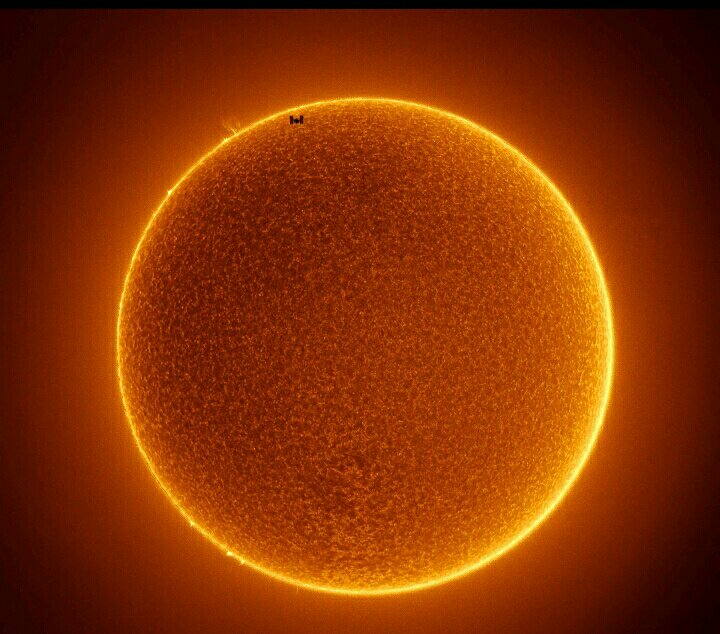
That’s no sunspot. It’s the International Space Station (ISS) caught passing in front of the Sun. Sunspots, individually, have a dark central umbra, a lighter surrounding penumbra, and no solar panels. By contrast, the ISS is a complex and multi-spired mechanism, one of the largest and most sophisticated machines ever created byhumanity. Also, sunspots occur on the Sun, whereas the ISS orbits the Earth. Transiting the Sun is not very unusual for the ISS, which orbits the Earth about every 90 minutes, but getting one’s timing and equipment just right for a great image is rare. Strangely, besides that fake spot, in this recent two-image composite, the Sun lacked any real sunspots. The featured picture combines two images — one capturing the space station transiting the Sun — and another taken consecutively capturing details of the Sun’s surface. Sunspots have been rare on the Sun since the dawn of the current Solar Minimum, a period of low solar activity. For reasons not yet fully understood, the number of sunspotsoccurring during both the previous and current solar minima have been unusually low.
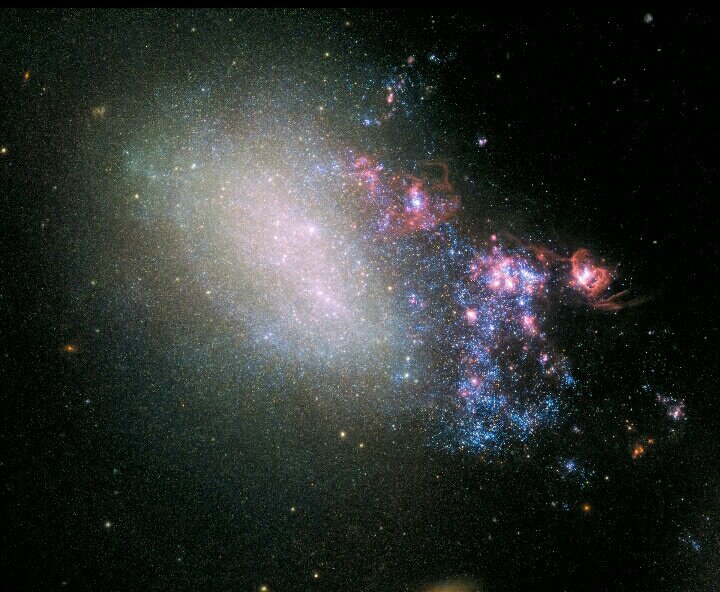
9. Hubble Peers at Galactic Cherry Blossoms
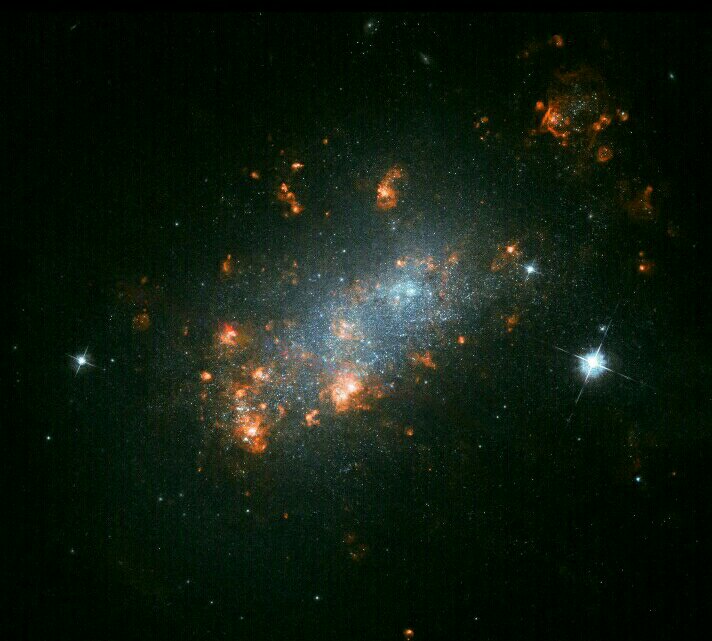
The galaxy NGC 1156 resembles a delicate cherry blossom tree flowering in springtime in this Hubble image. The many bright “blooms” within the galaxy are in fact stellar nurseries – regions where new stars are springing to life. Energetic light emitted by newborn stars in these regions streams outwards and encounters nearby pockets of hydrogen gas, causing the gas to glow with a characteristic pink hue.
NGC 1156 is located in the constellation of Aries (the Ram). It is classified as a dwarf irregular galaxy, meaning that it lacks a clear spiral or rounded shape, as other galaxies have, and is on the smaller side, albeit with a relatively large central region that is more densely packed with stars.
Some pockets of gas within NGC 1156 rotate in the opposite direction to the rest of the galaxy, suggesting that there has been a close encounter with another galaxy in NGC 1156’s past. The gravity of this other galaxy – and the turbulent chaos of such an interaction – could have scrambled the likely more orderly rotation of material within NGC 1156, producing the odd behavior we see today.
10.The Big Corona
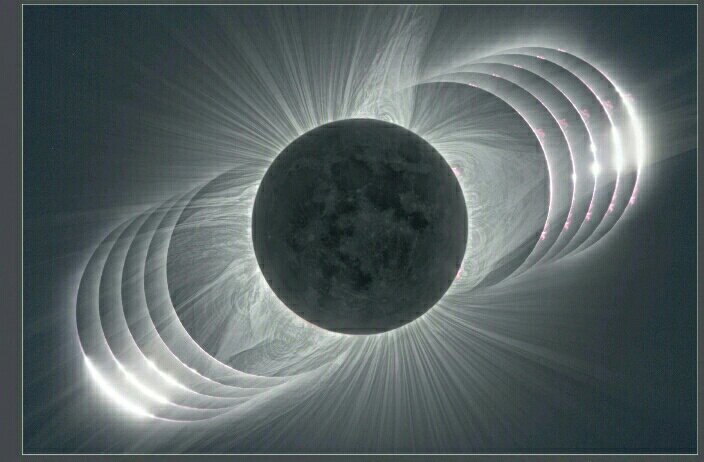
Most photographs don’t adequately portray the magnificence of the Sun’s corona. Seeing the corona first-hand during a total solar eclipse is unparalleled. The human eye can adapt to see coronal features and extent that average cameras usually cannot. Welcome, however, to the digital age. The featuredcentral image digitally combined short and long exposures that were processed to highlight faint and extended features in the corona of the total solar eclipse that occurred in August of 2017. Clearly visible are intricate layers and glowing caustics of an ever changing mixture of hot gas and magnetic fields in the Sun’s corona. Looping prominences appear bright pink just past the Sun’s limb. Faint details on the night side of the New Moon can even be made out, illuminated by sunlight reflected from the dayside of the Full Earth. Images taken seconds before and after the total eclipse show glimpses of the background Sun known as Baily’s Beads and Diamond Ring. Tomorrow, a new total solar eclipse will be visible from parts of South America.
If you enjoyed this post, I’d be very grateful if you’d help it spread by emailing it to a friend, or sharing it on Twitter or Facebook. Thank you!



 space science